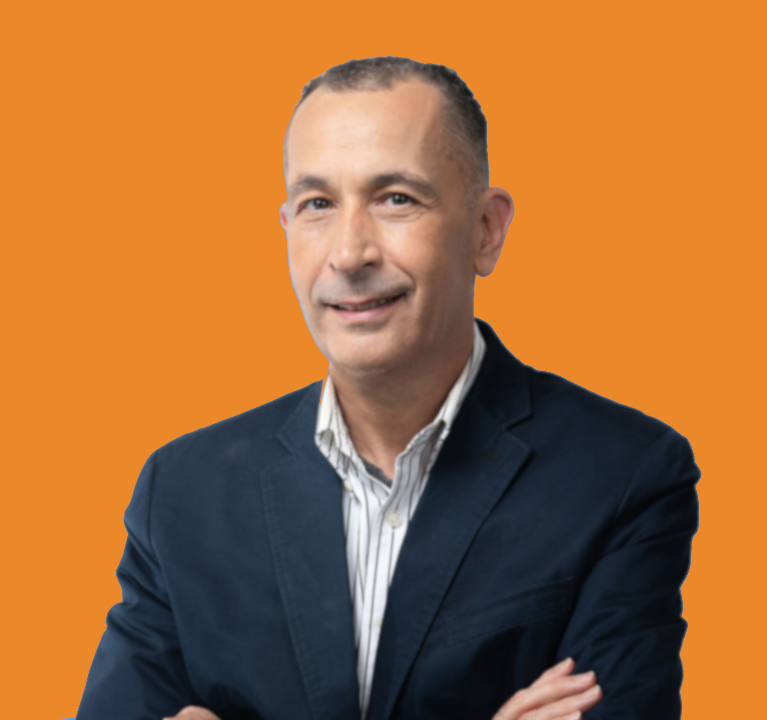
SecondStreet.org Legislative and Policy Director Harrison Fleming joined Patty Handysides to discuss a new poll which shows Canadians want more accountability in health care.
SecondStreet.org sat down with Chelsea, a parent whose child was let down by the public school system, to discuss what happened and alternatives in education.
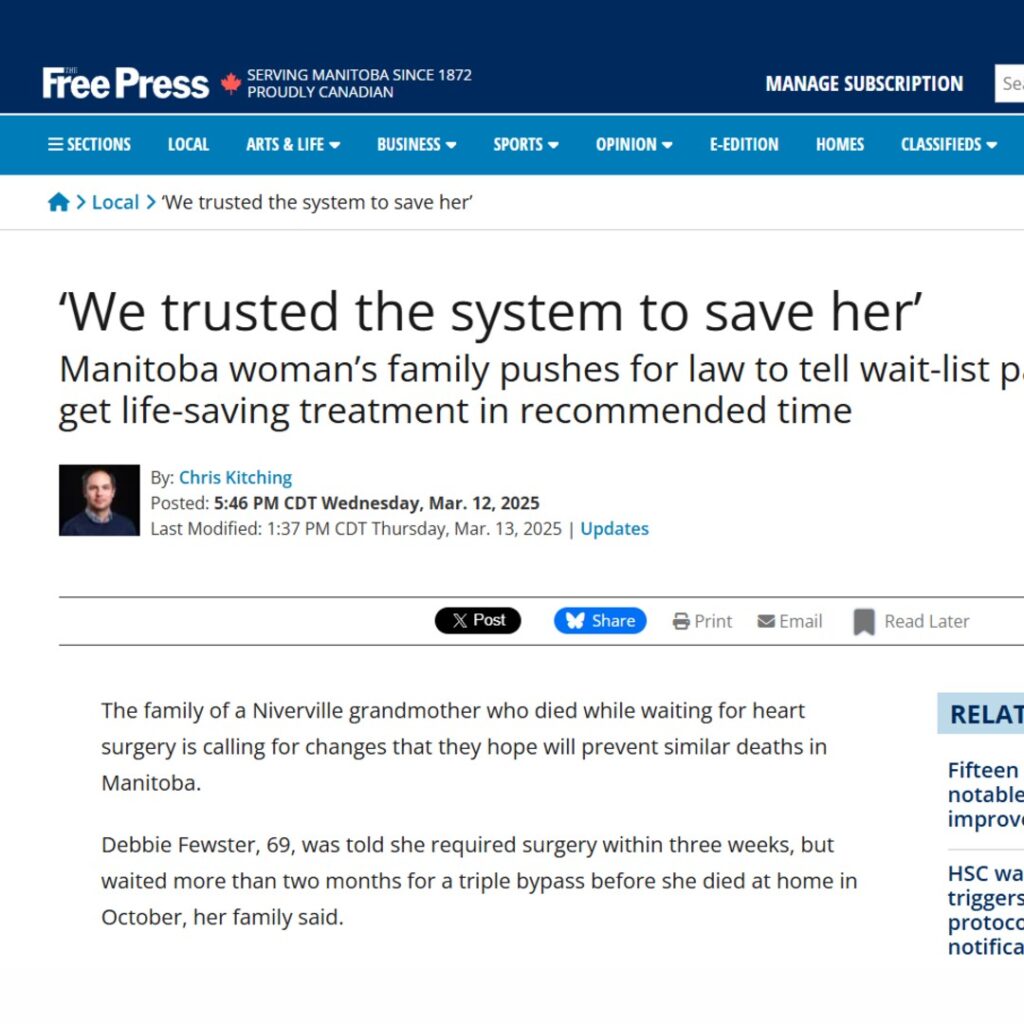
SecondStreet.org President Colin Craig writes in The Winnipeg Free Press that Debbie's Law is an easy way to save lives and improve accountability in health care.
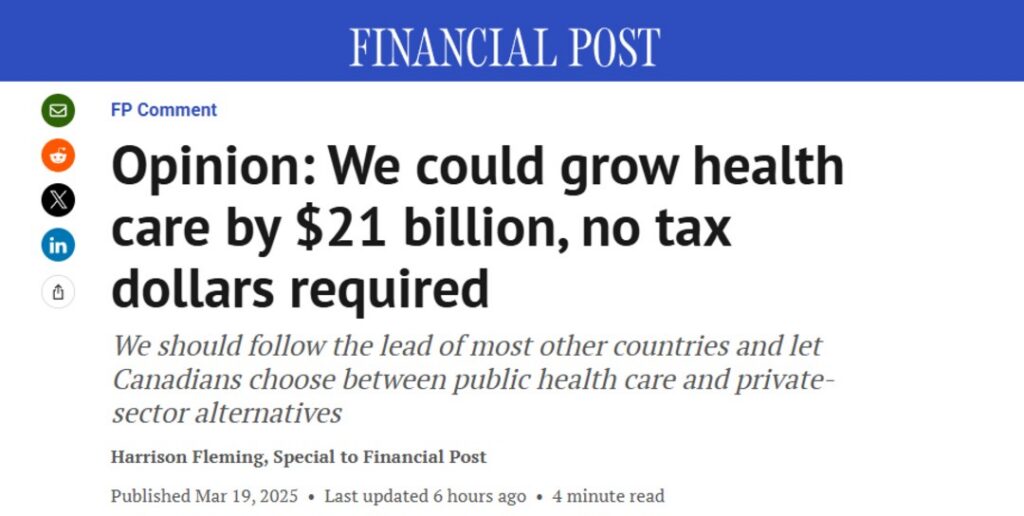
SecondStreet.org Policy and Legislative Affairs Director Harrison Fleming writes in The Financial Post that allowing private health insurance would be a big boost to the Canadian economy.
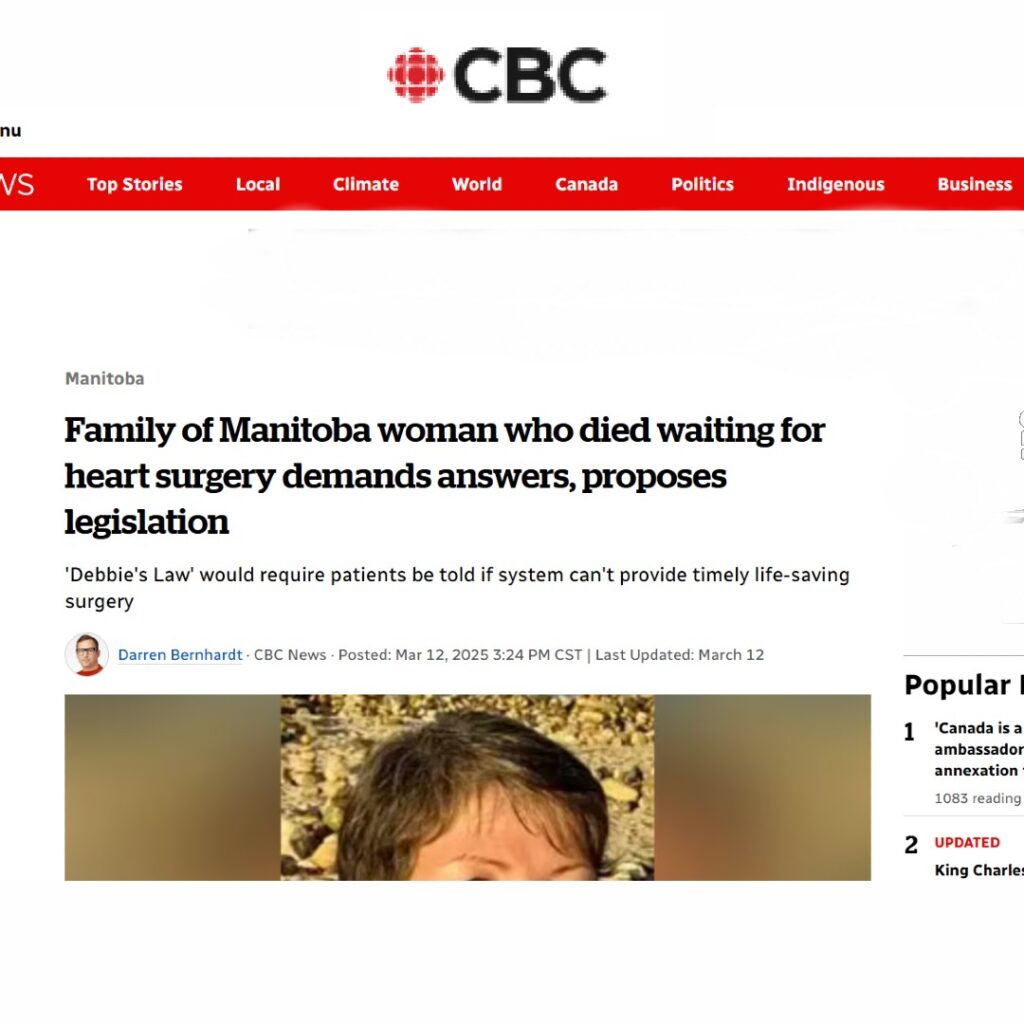
A Manitoba family is sharing the story of their mother who died on a waitlist. This has inspired SecondStreet.org to push governments to adopt Debbie's Law.
SecondStreet.org sat down with the family of Debbie Fewster, a Manitoba woman who died waiting longer than the recommended wait time for life-saving heart surgery.
SecondStreet.org Communications Director Dom Lucyk writes in the Western Standard that Canadians aren't happy with the direction of the public K-12 school system.
Colin is joined by journalist and documentary filmmaker Olesya Shyvikova, who shares how the pain of seeing the war in Ukraine compelled her to go back and capture it.
Colin welcomes Allison Ducluzeau a British Columbia cancer patient, and her brother Toby Hinton, to discuss what you should do when the health care system fails you.
The Canadian Constitution Foundation has been working on an important court case for several years now. We spoke with the CCF's Director of Litigation for an update.
The Montreal Economic Institute (MEI) recently came out with a new report on some health reforms currently being pursued by Alberta's provincial government. We discuss if other provinces follow suit.
Blood plasma plays an incredibly important role in society – from supporting patients with debilitating health issues to helping researchers develop a treatment for viruses such as COVID-19. With that in mind, we decided to take a closer look at the issue.
Our new policy brief shows Canada’s health care system is ill-equipped to fight a COVID-19 resurgence or an even stronger pandemic. The brief also examines five health care systems in other countries that provide better services for a lower cost.
Kim Purdy discusses her long wait for hip surgery in Alberta. Considering governments postponed thousands of procedures during COVID-19, many more patients will have similar experiences.
Our new policy brief shows Canada’s health care system is ill-equipped to fight a COVID-19 resurgence or an even stronger pandemic. The report also examines five health care systems in other countries that provide better services for a lower cost.
Dr. Brian Day’s court case could change health care across Canada. We had a fascinating discussion with the former President of the Canadian Medical Association about his case and health care reform in Canada.
As part of SecondStreet.org’s ongoing research into health care, we contracted Nanos Research to conduct some public opinion research. This policy brief summarizes the results of six health care questions that we posed to the public
As part of SecondStreet.org’s ongoing research into health care, we contracted Nanos Research to conduct some public opinion research. This policy brief summarizes the results of six health care questions that we posed to the public between February 29-March 3, 2020.
SecondStreet.org President Colin Craig and contributor Kris Sims discuss COVID-19. Need some good news about the coronavirus? Some aspects you may not have thought about?
You'll find that and more in our new video.
Imagine living with severe back pain and being told by Canada's health care system that it would take at least two years before you could receive surgery. That's what Canadian patient John Massing faced.
With Christmas just around the corner, SecondStreet.org, a new Canadian think tank, released a report that examines which provinces allow Canadians to purchase a private MRI scan for themselves or for a loved one.
In 1993, Canada’s first private magnetic resonance imaging (MRI) clinic opened in Calgary – the Western Canada MRI Centre. Critics accused the clinic of “undermining” Canada’s public health care system and predicted negative consequences.
More than a quarter-century after that clinic first opened, SecondStreet.org decided to investigate what options Canadian patients now have when it comes to paying for private MRI scans.
Tracy Skinner struggled with back pain for 13 years. The surgery she received in Calgary didn't work and the government told her there was nothing they could do ... "here's more painkillers."
Thankfully for Tracy, she found treatment in Tijuana, Mexico.
Alberta patient Danny Hozack describes the excellent service he received when he suffered from a retina tear on Christmas eve.
We want to hear your story!
Whether your experience with healthcare or education was a success or a struggle, your story is vital. We amplify the real-life experiences of Canadians to show what’s working and what’s failing.
Join 20,000+ Canadians in our movement for a better Canada.
Prevention – reduce demand in the first place
If Canadians lived healthier lives, we could reduce demand for emergency services, orthopaedic surgeries, primary care and more.
For instance, if you visit the Canadian Cancer Society’s website, you’ll read that “about four in ten” cancer cases are preventable. The Heart and Stroke Foundation notes that “almost 80 percent of premature heart disease and stroke can be prevented through healthy behaviours.” A similar number of Diabetes cases are also preventable.
Many joint replacements and visits to ERs and walk-in clinics could also be avoided through healthy living.
To be sure, not all health problems can be avoided through healthy living – everyday the system treats Canadians with genetic conditions, helps those injured in unavoidable accidents and more.
But there is an opportunity to reduce pressure on the health care system through Canadians shifting to healthier lifestyles – better diets, more exercise, etc.
To learn more, watch our Health Reform Now documentary (scroll up) or see this column.
Partner with non-profits and for-profit clinics
European countries will partner with anyone who can help patients.
It doesn’t matter if it’s a non-profit, a government entity or a private clinic. What matters is that patients receive quality treatment, in a timely manner and for a competitive price.
In Canada, governments often delivery services using government-run hospitals instead of seeing if non-profit or private clinics could deliver the services more effectively.
When governments have partnered with non-profit and private clinics, the results have often been quite good – Saskatchewan, Ontario and British Columbia are just a few examples of where partnerships have worked well.
Canada should pursue more of these partnerships to reduce wait times and increase the volume of services provided to patients.
To learn more, watch our Health Reform Now documentary (scroll up) or see the links above.
Make cross border care more accessible
In Canada, citizens pay high taxes each year and we’re promised universal health care services in return. The problem is, wait times are often extremely long in our health system – sometimes patients have to wait years to see a specialist or receive surgery.
If patients don’t want to wait long periods, they often have to reach into their own pocket and pay for treatment outside the province or country.
Throughout the European Union, we also find universal health care systems. But a key difference is that EU patients have the right to go to other EU countries, pay for surgery and then be reimbursed by their home government. Reimbursements cover up to what the patient’s home government would have spent to provide the treatment locally.
If Canada copied this approach, a patient waiting a year to get their hip operation could instead receive treatment next week in one of thousands of surgical clinics throughout the developed world.
Governments benefit too as the patient is now back on their feet and avoiding complications that sometimes come with long wait times – meaning the government doesn’t have to treat those complications on top of the initial health problem.
To learn more, watch our Health Reform Now documentary (scroll up) or this shorter video.
Legalize access to non-government providers
Canada is the only country in the world that puts up barriers, or outright bans patients from paying for health services locally.
For instance, a patient in Toronto cannot pay for a hip operation at a private clinic in Toronto. Their only option is to wait for the government to eventually provide treatment or leave the province and pay elsewhere.
Countries with better-performing universal health care systems do not have such bans. They allow patients a choice – use the public system or pay privately for treatment. Sweden, France, Australia and more – they all allow choice.
Why? One reason is that allowing choice means some patients will decide to pay privately. This takes pressure off the public system. For instance, in Sweden, 87% of patients use the public system, but 13% purchase private health insurance.
Ultimately, more choice improves access for patients.
To learn more, watch our Health Reform Now documentary (scroll up) or watch this short clip on this topic.
Shift to funding services for patients, not bureaucracies
In Canada, most hospitals receive a cheque from the government each year and are then asked to do their best to help patients. This approach is known as “block funding”.
Under this model, a patient walking in the door represents a drain on the hospital’s budget. Over the course of a year, hospital administrators have to make sure the budget stretches out so services are rationed. This is why you might have to wait until next year or the year after for a hip operation, knee operation, etc.
In better-performing universal health systems, they take the opposite approach – hospitals receive money from the government each time they help a patient. If a hospital completes a knee operation, it might receive, say, $10,000. If it completes a knee operation on another patient, it receives another $10,000.
This model incentivizes hospitals to help more patients – to help more patients with knee operations, cataract surgery, etc. This approach also incentivizes hospitals to spend money on expenses that help patients (e.g. more doctors, nurses, equipment, etc.) rather than using the money on expenses that don’t help patients (e.g. more admin staff).
To learn more about this policy option, please watch our Health Reform Now documentary (scroll up) or see this post by MEI.