News

Click on the buttons below to see the latest news released by SecondStreet.org, blog posts, and news media coverage of SecondStreet.org’s work.

March 12, 2025
CTV News Winnipeg covered a new SecondStreet.org policy proposal: Debbie's Law.
March 12, 2025
Alex Pierson covered a new SecondStreet.org policy proposal: Debbie's Law.
March 12, 2025
A Manitoba family is sharing the story of their mother who died on a waitlist. This has inspired SecondStreet.org to push governments to adopt Debbie's Law.
March 12, 2025
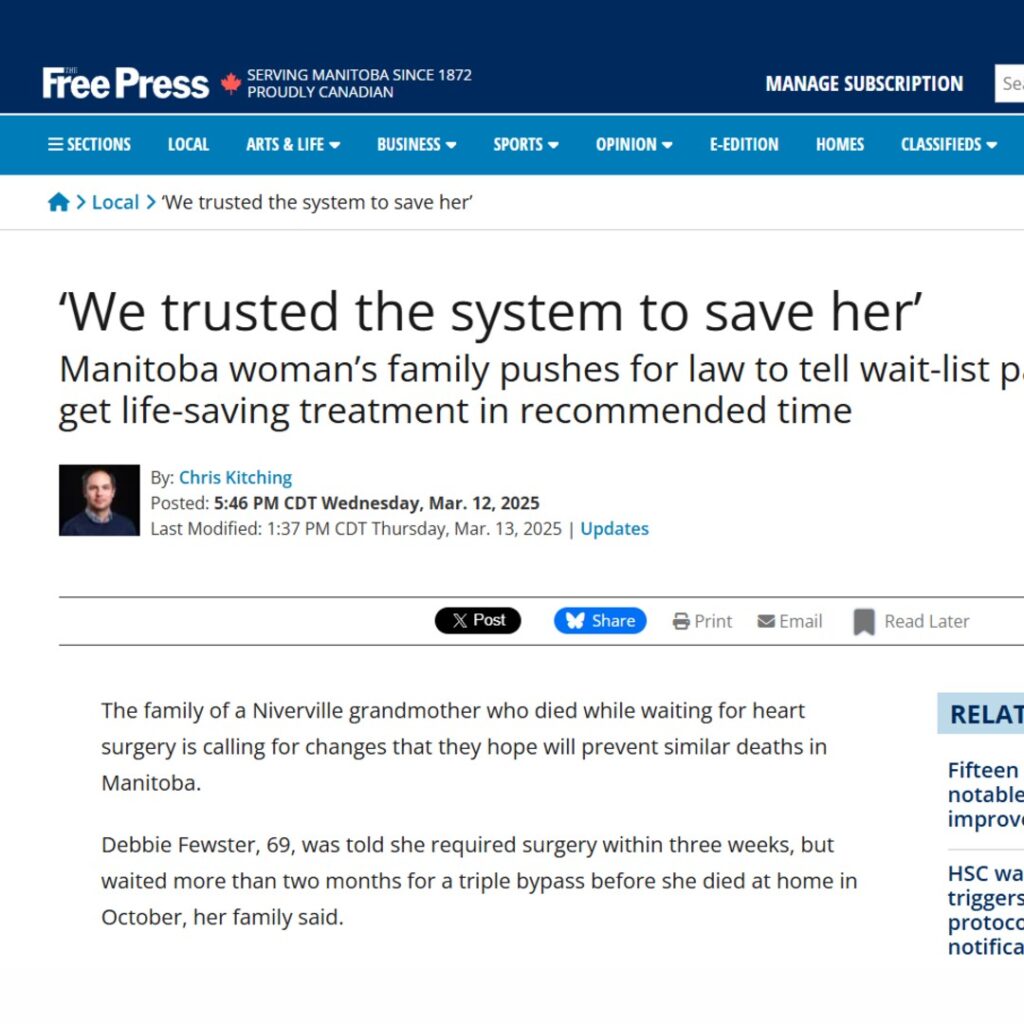
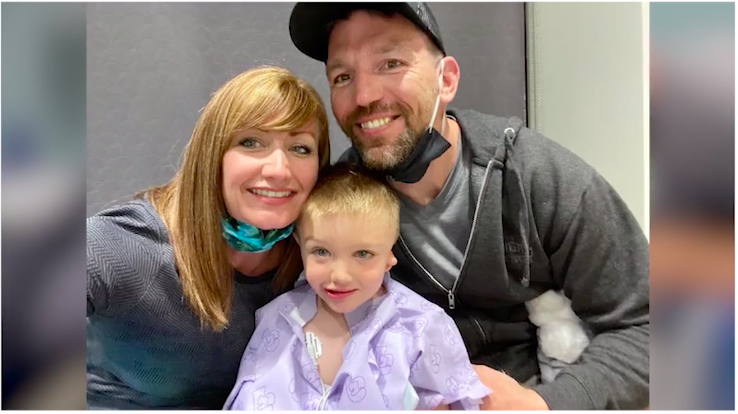
SecondStreet.org sat down with the family of Debbie Fewster, a Manitoba woman who died waiting longer than the recommended wait time for life-saving heart surgery.
March 12, 2025
A Manitoba family is sharing the story of their mother who died on a waitlist. This has inspired SecondStreet.org to propose Debbie's Law.
March 10, 2025
Colin welcomes Sam Cooper to discuss border security and criminal activity within Canada.
March 6, 2025
SecondStreet.org Policy and Legislative Affairs Director Harrison Fleming writes in The Western Standard that health care waitlist deaths are a national crisis.
March 5, 2025
SecondStreet.org Policy and Legislative Director Harrison Fleming joined Phil Johnson to discuss a new report on a potential private health insurance market in Canada.
March 5, 2025
A new SecondStreet.org report shows that Canadians are interesting in learning more about or buying private health insurance.
March 5, 2025
New research from SecondStreet.org shows that waiting list deaths are at a five-year high in Canada.
March 3, 2025
Colin welcomes Mark Milke and Samuel Sey to talk about diversity, equity, and inclusion.
February 24, 2025
Colin welcomes Kris Sims and Samantha Dagres to discuss property and municipal taxes throughout Canada.
February 21, 2025
SecondStreet.org President Colin Craig writes in The Hub that Canada's health system would be in better shape if people took their health seriously.
February 18, 2025
Colin welcomes Bev Ellison and Sydney Spratt, as well as Dom Lucyk, to speak on Canadian health care.
February 18, 2025
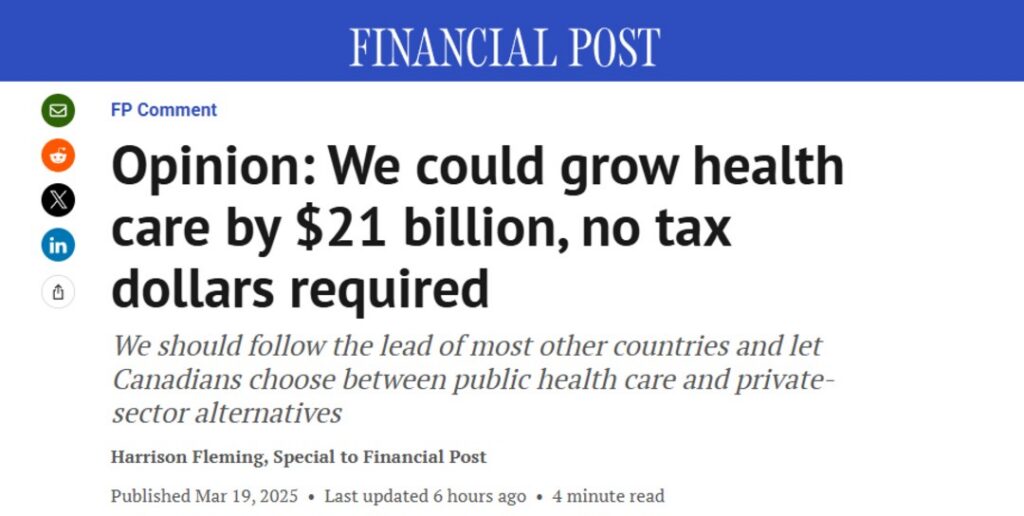
SecondStreet.org President Colin Craig writes in the Financial Post that politicians are finally paying attention to patients dying on waitlists.
February 12, 2025
SecondStreet.org President Colin Craig writes that cities do have a choice - they don't need to hike taxes.
February 4, 2025
SecondStreet.org sat down with the founder of STEM Innovation Academy in Calgary to discuss how charter schools improve choice in education.
February 3, 2025
SecondStreet.org highlighted waitlist deaths in Ontario, of which there were nearly 10,000 last year alone.
February 3, 2025
Colin welcomes Cody Battershill and Edward Kallio to speak about the geopolitical challenges of Canada's oil and gas sector.
January 27, 2025
Colin welcomes guests Scott Fash and Jay Goldberg to discuss the housing crisis in Canada.
August 23, 2024
SecondStreet.org President Colin Craig writes in the Financial Post that the B.C. Conservative Party has a bold plan to reform health care.
August 19, 2024
SecondStreet.org President Colin Craig joined Rob Breakenridge to discuss a great new resource to help Canadian patients: PatientOptions.ca.
August 17, 2024
SecondStreet.org Legistlative and Policy Director Harrison Fleming writes in True North that more spending won't fix Canada's unreliable health care system.
August 15, 2024
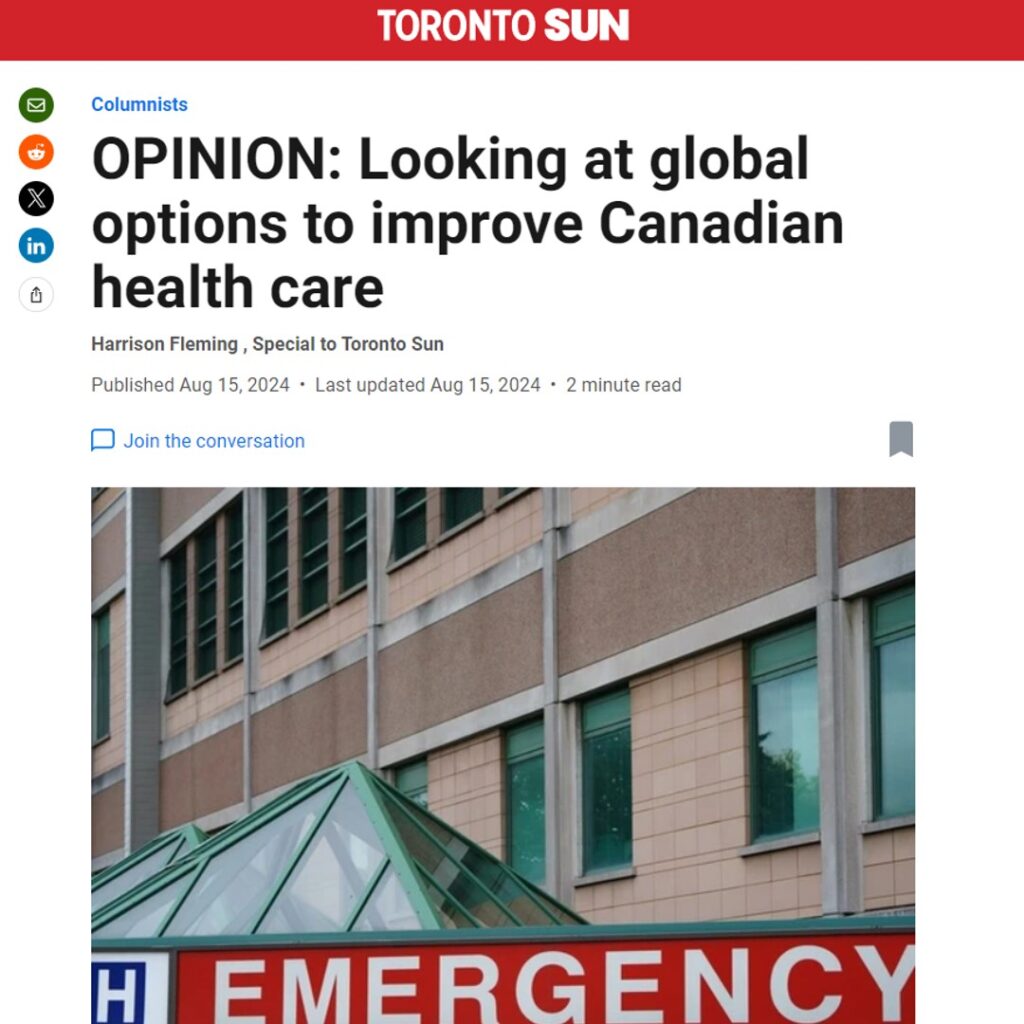
SecondStreet.org Legislative and Policy Director Harrison Fleming writes in the Toronto Sun that Canadians should look to the rest of the world for options on health reform.
August 13, 2024
Colin is joined by Scott Andison and Chris Spoke to discuss Canada's housing crisis and whether or not there's a solution in sight.
August 5, 2024
Colin speaks with Catherine Kavanagh and Paige MacPherson to discuss the education sector in Canada.
July 25, 2024
SecondStreet.org President Colin Craig joined Andrew Lawton to discuss the groundbreaking new documentary, Health Reform Now.
July 24, 2024
SecondStreet.org President Colin Craig joined Hal Anderson to discuss the groundbreaking new documentary, Health Reform Now.
July 24, 2024
SecondStreet.org Communications Director Dom Lucyk joined Rick Zamperin to discuss the groundbreaking new documentary, Health Reform Now.
July 24, 2024
SecondStreet.org President Colin Craig joined Evan Bray to discuss the groundbreaking new documentary, Health Reform Now.
July 24, 2024
SecondStreet.org President Colin Craig joined Alex Pierson to discuss the groundbreaking new documentary, Health Reform Now.
July 15, 2024
Colin welcomes Caylan Ford and Lisa Davis to discuss the surge in applicants to this alternative to the public school system.
July 9, 2024
Colin welcomes Matthew Lau to discuss the widespread issues since the federal government's takeover of the childcare industry.
July 1, 2024
Colin is joined by Heidi McKillop, who produced the documentary 'Generation Green'. They discuss the pros and cons of renewable energy.
June 24, 2024
Colin welcomes Warren Kinsella and Richard Marceau to discuss the disturbing rise in anti Semitism in Canada.
June 23, 2024
SecondStreet.org Communications Director Dom Lucyk writes in the Epoch Times that socialist leaders don't practice what they preach.
June 18, 2024
Colin welcomes Paige Macpherson to discuss recent poll numbers that suggest the majority of Canadians are dissatisfied with public education.
June 12, 2024
SecondStreet.org Communications Director Dom Lucyk writes in the Western Standard that Canadians aren't happy with the direction of the public K-12 school system.
June 10, 2024
Colin is joined by journalist and documentary filmmaker Olesya Shyvikova, who shares how the pain of seeing the war in Ukraine compelled her to go back and capture it.
May 22, 2024
SecondStreet.org President Colin Craig joined Rob Snow for his Newsday Panel, discussing a few recent news stories.
April 13, 2021
Public policy think tank SecondStreet.org released public opinion research today that shows a majority of Canadians want governments to be focussed on fighting COVID-19 and returning things to normal rather than looking at restructuring the economy with higher carbon taxes, rebates, regulations and subsidies to address climate change.
March 19, 2021
We asked each province an important question: How many surgeries and procedures did you postpone due to COVID? Our new video summarizes their responses –
March 16, 2021
Dr. Shawn Whatley sat down with to discuss his new book "When politics comes before patients".
March 4, 2021
After COVID-19 emerged in Canada, governments postponed thousands of surgeries and procedures. SecondStreet.org examined the situation more closely.
March 4, 2021
We asked governments across Canada for data on how many surgeries, procedures and consultations they've postponed since COVID emerged.
February 18, 2021
Rotational workers are found all across our country. They are men and women who work in harsh and remote parts of Canada. Second Street.org interviewed Tammy and Rob McCutcheon to get their take on the new COIVD restrictions happening in their province.
February 13, 2021
Dr. Belchetz was an emergency room doctor who felt there needed to be a better way to help patients than making them sit in waiting rooms for hours on end. So he did something about it...
January 4, 2021
What can be done about patients dying on waiting lists in Canada? How common is the problem? See our new clip for details –
December 22, 2020
Government data suggests healthy people have a better chance of beating COVID and avoiding hospitalization than non-healthy people. Shouldn't we be talking about healthy living more?
December 2, 2020
This policy examines the number of surgical cancellations in 2018-19 that were due to the patient passing away.
December 2, 2020
SecondStreet.org released ground-breaking research today that shows there were 1,480 surgeries that were cancelled in 2018-19 as the patient had passed away.
November 12, 2020
You know whose universal health care system often ranks higher than Canada's? Australia's medicare system. We spoke with a public policy expert from down under to discuss how their system works.
November 3, 2020
Since COVID-19 emerged in Canada, governments have opened up more opportunities for patients to videoconference with their doctors or speak with them on the phone. Today we spoke with Maurice and Ilene Thevenot, two senior citizens who live two hours south west of Winnipeg, about their experience.
October 20, 2020
We recently spoke with Dr. Lester Liao from the Hospital for Sick Children in Toronto to get his take on video conferencing. Dr. Lester Liao explains through his professional experience the pros of this developing technology, as well as the shortfalls.
September 28, 2020
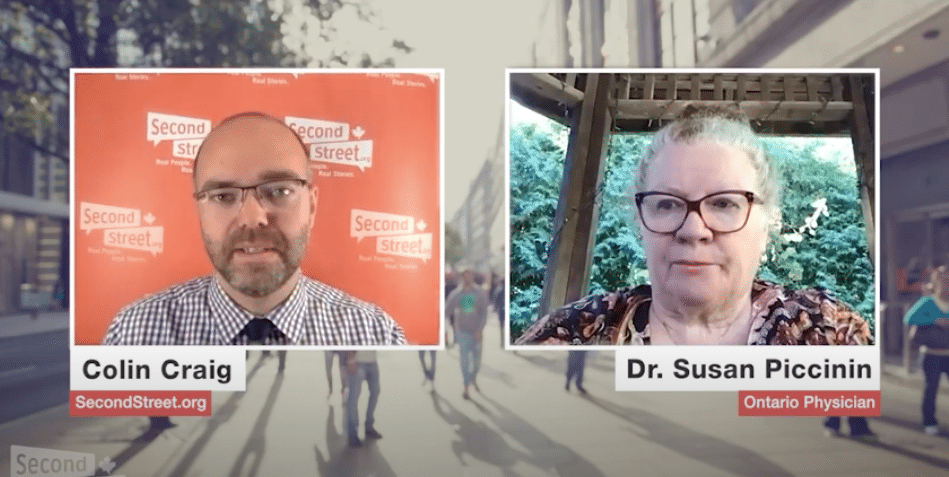
Dr. Susan Piccinin has been a practicing physician in Hamilton, Ontario for 30 years. We spoke with her to get her professional opinion on waiting lists in Canada, private health care and Canada's aging population. 
September 22, 2020
International studies routinely show Australia's health care system outperforms Canada and the United States. At SecondStreet.org we took a look at what Australia is doing differently.
September 16, 2020
All politics aside, this could be really good news for patients. New Conservative leader Erin O'Toole has committed to health reform if he is elected prime minister.
September 16, 2020
The Canadian Constitution Foundation has been working on an important court case for several years now. We spoke with the CCF's Director of Litigation for an update.
September 16, 2020
The Montreal Economic Institute (MEI) recently came out with a new report on some health reforms currently being pursued by Alberta's provincial government. We discuss if other provinces follow suit.
July 24, 2020
Health care across Canada could be affected by an important case the Canadian Constitution Foundation has before the courts right now...

We want to hear
your story!

Whether your experience with healthcare or education was a success or a struggle, your story is vital. We amplify the real-life experiences of Canadians to show what’s working and what’s failing.

Join 20,000+ Canadians in our movement for a better Canada.

Name(Required)
Select Your Interests(Required)
Consent(Required)

Prevention – reduce demand in the first place

If Canadians lived healthier lives, we could reduce demand for emergency services, orthopaedic surgeries, primary care and more. 

For instance, if you visit the Canadian Cancer Society’s website, you’ll read that “about four in ten” cancer cases are preventable. The Heart and Stroke Foundation notes that “almost 80 percent of premature heart disease and stroke can be prevented through healthy behaviours.” A similar number of Diabetes cases are also preventable. 

Many joint replacements and visits to ERs and walk-in clinics could also be avoided through healthy living. 

To be sure, not all health problems can be avoided through healthy living – everyday the system treats Canadians with genetic conditions, helps those injured in unavoidable accidents and more.  

But there is an opportunity to reduce pressure on the health care system through Canadians shifting to healthier lifestyles – better diets, more exercise, etc. 

To learn more, watch our Health Reform Now documentary (scroll up) or see this column. 

Partner with non-profits and for-profit clinics

European countries will partner with anyone who can help patients. 

It doesn’t matter if it’s a non-profit, a government entity or a private clinic. What matters is that patients receive quality treatment, in a timely manner and for a competitive price.  

In Canada, governments often delivery services using government-run hospitals instead of seeing if non-profit or private clinics could deliver the services more effectively. 

When governments have partnered with non-profit and private clinics, the results have often been quite good – Saskatchewan, Ontario and British Columbia are just a few examples of where partnerships have worked well. 

Canada should pursue more of these partnerships to reduce wait times and increase the volume of services provided to patients.  

To learn more, watch our Health Reform Now documentary (scroll up) or see the links above. 

Make cross border care more accessible

In Canada, citizens pay high taxes each year and we’re promised universal health care services in return. The problem is, wait times are often extremely long in our health system – sometimes patients have to wait years to see a specialist or receive surgery. 

If patients don’t want to wait long periods, they often have to reach into their own pocket and pay for treatment outside the province or country. 

Throughout the European Union, we also find universal health care systems. But a key difference is that EU patients have the right to go to other EU countries, pay for surgery and then be reimbursed by their home government. Reimbursements cover up to what the patient’s home government would have spent to provide the treatment locally. 

If Canada copied this approach, a patient waiting a year to get their hip operation could instead receive treatment next week in one of thousands of surgical clinics throughout the developed world. 

Governments benefit too as the patient is now back on their feet and avoiding complications that sometimes come with long wait times – meaning the government doesn’t have to treat those complications on top of the initial health problem. 

To learn more, watch our Health Reform Now documentary (scroll up) or this shorter video. 

Legalize access to non-government providers

Canada is the only country in the world that puts up barriers, or outright bans patients from paying for health services locally. 

For instance, a patient in Toronto cannot pay for a hip operation at a private clinic in Toronto. Their only option is to wait for the government to eventually provide treatment or leave the province and pay elsewhere. 

Countries with better-performing universal health care systems do not have such bans. They allow patients a choice – use the public system or pay privately for treatment. Sweden, France, Australia and more – they all allow choice. 

Why? One reason is that allowing choice means some patients will decide to pay privately. This takes pressure off the public system. For instance, in Sweden, 87% of patients use the public system, but 13% purchase private health insurance. 

Ultimately, more choice improves access for patients. 

To learn more, watch our Health Reform Now documentary (scroll up) or watch this short clip on this topic. 

Shift to funding services for patients, not bureaucracies

In Canada, most hospitals receive a cheque from the government each year and are then asked to do their best to help patients. This approach is known as “block funding”. 

Under this model, a patient walking in the door represents a drain on the hospital’s budget. Over the course of a year, hospital administrators have to make sure the budget stretches out so services are rationed. This is why you might have to wait until next year or the year after for a hip operation, knee operation, etc. 

In better-performing universal health systems, they take the opposite approach – hospitals receive money from the government each time they help a patient. If a hospital completes a knee operation, it might receive, say, $10,000. If it completes a knee operation on another patient, it receives another $10,000. 

This model incentivizes hospitals to help more patients – to help more patients with knee operations, cataract surgery, etc. This approach also incentivizes hospitals to spend money on expenses that help patients (e.g. more doctors, nurses, equipment, etc.) rather than using the money on expenses that don’t help patients (e.g. more admin staff). 

To learn more about this policy option, please watch our Health Reform Now documentary (scroll up) or see this post by MEI.