
Meet the team of storytellers and policy experts working every day to show how government decisions impact your life.


Troy Lanigan is a consultant who works with clients in the fields of advocacy and public policy.
Prior to starting his consulting business, Troy worked in a variety of capacities with the Canadian Taxpayers Federation for over 26 years, including spokesperson in his home province of British Columbia, and as President and CEO for 10 years.
He is the author of Fighting for Taxpayers: Battles Fought and Battles Ahead and is past chair of the World Taxpayers Association: an umbrella group of approximately 60 taxpayer organizations on six continents – purposed for networking, best practices exchange, regional forums, and support for new organizations.
He has helped found two organizations: the campus-based campaign Generation Screwed, and the storytelling think tank SecondStreet.org.
Troy enjoys travel, golf, playing guitar and wine education. A two-time Ironman, athletic endeavours today involve flipping channels between NFL football and F1. He and his wife Erika have four adult children and live in Kelowna, BC.



Colin Craig has worked in the field of public policy for two decades and has helped shape government decisions at the municipal, provincial and federal level.
In 2018, he was hired as President of SecondStreet.org and played an instrumental role in launching the organization. Colin oversees the organization’s groundbreaking research and storytelling activities, and is the host of their television show – On Second Street (you can find it on The News Forum channel).
Prior to launching SecondStreet.org, Colin worked for the Canadian Taxpayers Federation (CTF), a non-profit taxpayers’ watchdog organization.
During his time with the CTF, he led the organization’s efforts to convince the federal government to draft and pass the First Nations Financial Transparency Act.
Colin was also instrumental in exposing corruption during the construction of the City of Winnipeg’s police headquarters project. While working for the CTF in Alberta, he exposed and helped discontinue the City of Calgary’s golden retirement bonus scheme, helped reform council’s pension system (the mayor’s second pension is being phased out) and helped the CTF convince a majority of voters to vote “no” during Calgary’s Olympic bid plebiscite.
Colin has an MBA and a degree in economics from the University of Manitoba. He was awarded the Queen Elizabeth II’s Platinum Jubilee medal in 2022 by the Premier of Alberta. Colin is the author of “The Government Wears Prada” and contributed several chapters to the eBook Life After COVID
Email: colin@secondstreet.org
Phone: 403-909-2055
For a high-resolution headshot of Colin, click here.


Melanie was born and raised in Flin Flon (Manitoba) and currently works part-time as Executive Secretary for SecondStreet.org.
Melanie also serves as the Executive Vice President of the Canadian Taxpayers Federation, Auditor and Assistant Secretary for the World Taxpayers Associations and acts as Administrator for Civitas Canada.
Melanie currently lives in Regina, Saskatchewan with her family and spends her spare time running half marathons (slowly) and doing CrossFit (badly).


Paula is a proud immigrant and Canadian. She has worked in politics and public policy for over a decade and has managed campaigns at the national and local level.
On Parliament Hill, she has served as community relations manager for the Office of the Leader of the Opposition and has worked for various MPs managing stakeholder relations.
Her experience working with grassroots groups has given her a keen eye and interest in the stories of ordinary Canadians and how policy affects them. She strives to amplify the voices of these ordinary Canadians and advocate for good public policy in our country.
Paula is a University of Toronto political science alumni and grew up in Mississauga, Ontario.
Currently she lives in Perth, Ontario with her husband and their young daughter.
Email: paula@secondstreet.org


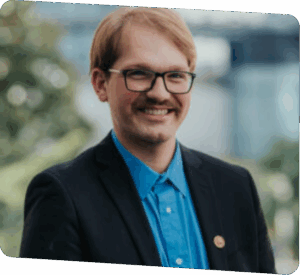
Dom Lucyk was born and raised in Saskatchewan, having grown up in Swift Current and currently living in Regina.
He has a background in media. In 2019, he graduated from the Western Academy Broadcasting College in Saskatoon and went on to spend three years working as an anchor, reporter and producer with 980 CJME and 650 CKOM, the top news/talk radio stations in the province.
He’s also worked with groups like Students for Liberty during a year-long stint at the University of Saskatchewan, where he studied political science.
When he’s not working to tell everyday people’s stories on how they’re affected by government policy, you’ll likely find him birdwatching at Wascana Park or Last Mountain Lake, rooting for his beloved Chicago Blackhawks (even when they’re very bad), or playing with his cat, Rambo.
Email: dominick@secondstreet.org
Phone: 306-774-4245
For a professional headshot of Dom – click here.


Bacchus Barua is a Canadian economist with over 15 years of experience working with think tanks to conduct research, communicate ideas, and challenge the status-quo.
Bacchus specializes in health care policy, and has helped shape public discourse in the field through frequent commentary on radio and television – including appearances on CBC, Global News, CTV, BNN and articles featured in the Wall Street Journal, National Post, Globe and Mail, Maclean’s, and Forbes. He was also invited to provide testimony as part of a panel of witnesses for the House of Commons Standing Committee on Health (HESA) in 2022.
As the former Director of Health Policy studies at the Fraser Institute, Bacchus conducted research on a range of key health care topics including wait times, hospital performance, access to new pharmaceuticals, the sustainability of health-care spending, the impact of aging on health-care expenditures, and international comparisons of health care systems. He currently also serves as an affiliate scholar with the Canadian Health Policy Institute [CHPI].
Bacchus completed his B.A. (Honours) in Economics at the University of Delhi (Ramjas College) and received an M.A. in Economics from Simon Fraser University where he specialized in Experimental Economics & Natural Resource Management. He also developed a passion for environmental economics after attending a summer school program at the London School of Economics (LSE).
In his free time, Bacchus enjoys playing music, volunteers as a committee member and organizer for Concerts Denman, and serves as a peer-reviewer for academic journals.

Heidi McKillop is a country girl at heart, born and raised in a small village called Harvey Station, New Brunswick.
Heidi’s first job, age 14, was washing dishes and preparing meals at the local nursing home. She has also worked within the restaurant industry, tourism, long term care, customer service, office management, and the energy industry.
Heidi earned her first degree in sociology at St.Thomas University. She later completed her second degree in social work from St.Thomas.
Heidi enjoys camping and hiking in the beautiful Kananaskis Country. She also enjoys horseback riding and learning new ranching skills. She is an avid reader and loves the social aspects of living in downtown Calgary.

James was born and raised in South Wales, UK before emigrating to Canada in 2013.
After graduating in Law & Politics at Cardiff University, James worked with a variety of national governments across the world, including the US Congress, the UK Parliament and the Australian Senate. Since arriving in Canada, he has worked in communications and government relations roles with expertise in natural resources, health and aviation.
When he isn’t working, James enjoys watching football, throwing a rugby ball around and trap shooting at his local club near Calgary, AB.

Based in Winnipeg, Kristen Schulz is a small business owner.
In her spare time, she helps SecondStreet.org with a number of research projects, including filing Freedom of Information requests nationwide.
Kristen is particularly interested in health care and education policy.

Ana is a lawyer with a degree from the university of Carabobo in Venezuela, back in 2014.
A few years later, she completed a postgraduate in International Business Management in Toronto.
Ana got involved in politics in 2014 after volunteering for Cedice Libertad (Caracas), one of the most influential libertarian Think Tanks in Latin America.
Once in North America, she participated in different seminars and conferences, becoming an alumni of the Cato Institute (Washington), the Institute of Liberal Studies (Ottawa) and the Fraser Institute (Vancouver).
In addition, Ana became a formal panelist of the Toronto based and award winner political podcast, The Raben Report.
Ana has been working in banking and is an enthusiast of financial crime prevention, especially anti-money laundering.
She is also the founder and co-leader of Canada’s very first Ladies Of Liberty Alliance chapter, LOLA Toronto.
SecondStreet.org is excited for Ana to bring her unique experiences and passion for liberty to the organization as a contributor.
If Canadians lived healthier lives, we could reduce demand for emergency services, orthopaedic surgeries, primary care and more.
For instance, if you visit the Canadian Cancer Society’s website, you’ll read that “about four in ten” cancer cases are preventable. The Heart and Stroke Foundation notes that “almost 80 percent of premature heart disease and stroke can be prevented through healthy behaviours.” A similar number of Diabetes cases are also preventable.
Many joint replacements and visits to ERs and walk-in clinics could also be avoided through healthy living.
To be sure, not all health problems can be avoided through healthy living – everyday the system treats Canadians with genetic conditions, helps those injured in unavoidable accidents and more.
But there is an opportunity to reduce pressure on the health care system through Canadians shifting to healthier lifestyles – better diets, more exercise, etc.
To learn more, watch our Health Reform Now documentary (scroll up) or see this column.
European countries will partner with anyone who can help patients.
It doesn’t matter if it’s a non-profit, a government entity or a private clinic. What matters is that patients receive quality treatment, in a timely manner and for a competitive price.
In Canada, governments often delivery services using government-run hospitals instead of seeing if non-profit or private clinics could deliver the services more effectively.
When governments have partnered with non-profit and private clinics, the results have often been quite good – Saskatchewan, Ontario and British Columbia are just a few examples of where partnerships have worked well.
Canada should pursue more of these partnerships to reduce wait times and increase the volume of services provided to patients.
To learn more, watch our Health Reform Now documentary (scroll up) or see the links above.
In Canada, citizens pay high taxes each year and we’re promised universal health care services in return. The problem is, wait times are often extremely long in our health system – sometimes patients have to wait years to see a specialist or receive surgery.
If patients don’t want to wait long periods, they often have to reach into their own pocket and pay for treatment outside the province or country.
Throughout the European Union, we also find universal health care systems. But a key difference is that EU patients have the right to go to other EU countries, pay for surgery and then be reimbursed by their home government. Reimbursements cover up to what the patient’s home government would have spent to provide the treatment locally.
If Canada copied this approach, a patient waiting a year to get their hip operation could instead receive treatment next week in one of thousands of surgical clinics throughout the developed world.
Governments benefit too as the patient is now back on their feet and avoiding complications that sometimes come with long wait times – meaning the government doesn’t have to treat those complications on top of the initial health problem.
To learn more, watch our Health Reform Now documentary (scroll up) or this shorter video.
Canada is the only country in the world that puts up barriers, or outright bans patients from paying for health services locally.
For instance, a patient in Toronto cannot pay for a hip operation at a private clinic in Toronto. Their only option is to wait for the government to eventually provide treatment or leave the province and pay elsewhere.
Countries with better-performing universal health care systems do not have such bans. They allow patients a choice – use the public system or pay privately for treatment. Sweden, France, Australia and more – they all allow choice.
Why? One reason is that allowing choice means some patients will decide to pay privately. This takes pressure off the public system. For instance, in Sweden, 87% of patients use the public system, but 13% purchase private health insurance.
Ultimately, more choice improves access for patients.
To learn more, watch our Health Reform Now documentary (scroll up) or watch this short clip on this topic.
In Canada, most hospitals receive a cheque from the government each year and are then asked to do their best to help patients. This approach is known as “block funding”.
Under this model, a patient walking in the door represents a drain on the hospital’s budget. Over the course of a year, hospital administrators have to make sure the budget stretches out so services are rationed. This is why you might have to wait until next year or the year after for a hip operation, knee operation, etc.
In better-performing universal health systems, they take the opposite approach – hospitals receive money from the government each time they help a patient. If a hospital completes a knee operation, it might receive, say, $10,000. If it completes a knee operation on another patient, it receives another $10,000.
This model incentivizes hospitals to help more patients – to help more patients with knee operations, cataract surgery, etc. This approach also incentivizes hospitals to spend money on expenses that help patients (e.g. more doctors, nurses, equipment, etc.) rather than using the money on expenses that don’t help patients (e.g. more admin staff).
To learn more about this policy option, please watch our Health Reform Now documentary (scroll up) or see this post by MEI.